The Building Blocks of a Reliable Baltic Company Database
Every trustworthy Baltic company database starts with the raw material that defines a business’s legal footprint: official registry records. Estonia’s e‑Business Register, Latvia’s Enterprise Register, and Lithuania’s Register of Legal Entities each maintain central repositories that are the ultimate source of truth. A high‑quality Baltic database doesn’t simply scrape or mirror these sources; it ingests, translates, and normalises the data so that a company registered in Tallinn looks as legible and structured as one based in Riga or Vilnius. This process involves converting local legal forms—osaühing (OÜ) in Estonia, sabiedrība ar ierobežotu atbildību (SIA) in Latvia, and uždaroji akcinė bendrovė (UAB) in Lithuania—into universally understood categories, while preserving native‑language details for those who need them.
Beyond basic identifiers like registration number, VAT status, and date of incorporation, a comprehensive Baltic company database enriches the profile with financial figures, ownership structures, and contact information. Annual reports often reveal revenue, profit, and employee counts, turning the database into a benchmarking tool. Shareholder and board member listings expose ultimate beneficial owners (UBOs), a feature that compliance officers in banks and fintech firms find indispensable. Because the three Baltic states mandate public disclosure of such details, aggregators can legally deliver near‑real‑time updates. The best databases also layer in classification codes, such as NACE Rev. 2 activities, so a user can instantly filter for, say, road freight transport (4941) across all three countries without guessing at local labels.
The freshness and accuracy of the information depend on how frequently the data pipeline runs. While some registries update daily and others weekly, a reliable Baltic company database synchronises every change—new formations, address moves, capital increases, or liquidations—within a timeframe that supports time‑sensitive decisions. User‑friendly interfaces then allow filtering by location (down to the municipality), legal form, industry, size, or financial health. Whether you need a list of all active IT companies in Tartu with fewer than 50 employees or a snapshot of Latvian food producers with export‑oriented revenues, the database translates a complex multilingual landscape into a clean, sortable grid. That architectural backbone is what separates a true Baltic company database from a mere collection of static PDFs.
From Prospecting to Compliance: How Teams Tap into Baltic Company Intelligence
Imagine a German manufacturer of industrial cooling systems that wants to expand its Baltic service network. Without a unified database, the sales team would visit three separate registries, wrestle with Estonian, Latvian, and Lithuanian search forms, and manually merge the results into a spreadsheet. A Baltic company database collapses those steps into a single query. The team can select “Manufacturing” and “Installation of industrial machinery” as activity codes, limit the search to firms with at least a handful of employees and a valid VAT number, and export a ready‑to‑call prospect list in minutes. The same logic applies for software companies scouting Latvian development partners, logistics firms seeking Lithuanian carriers, or agricultural suppliers searching for Estonian cooperatives. By eliminating the friction of cross‑border data hunting, the database lets revenue teams spend more time on conversations and less on administrative drudgery.
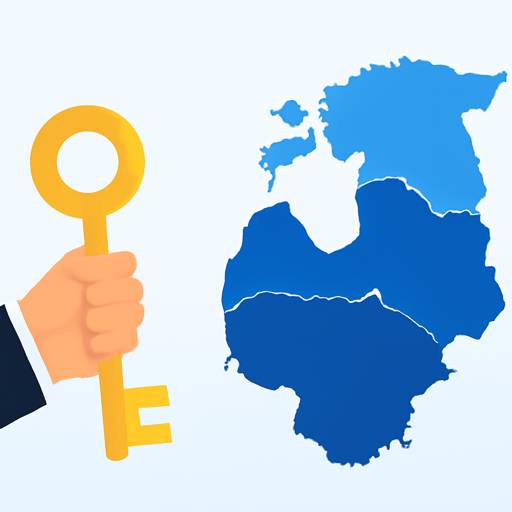
Compliance departments, on the other hand, lean on a Baltic company database for entirely different reasons. Anti‑money laundering (AML) regulations and know‑your‑customer (KYC) requirements demand verified information about clients and counterparties. A bank onboarding a Lithuanian fintech startup needs to confirm the company’s registered address, directors, and ultimate beneficial owners. When those details are instantly available in a Baltic company database—and cross‑referenced against sanctions lists or politically exposed person (PEP) databases—the risk assessment moves from hours of manual verification to seconds of automated checks. The same applies to law firms conducting due diligence for mergers, or insurance companies evaluating a potential policyholder in Riga. Each query reinforces the database’s role as a trust‑building infrastructure for the entire region.
Market researchers and consultants also find enormous value in these aggregated repositories. Analysing the evolution of the Baltic startup ecosystem, for example, becomes a matter of filtering for young, high‑growth UABs, SIAs, and OÜs with venture capital backing or rapid revenue jumps. A Baltic company database can reveal spatial clusters—tech firms gravitating toward Vilnius’s Žvėrynas district, or logistics hubs springing up near the Freeport of Riga—that inform site‑selection decisions. Academics studying corporate governance can pull board composition data across thousands of firms to identify trends in gender diversity or board independence. When professionals need to move fast without sacrificing accuracy, a resource like the baltic company database built for cross‑country exploration transforms scattered public records into actionable business intelligence.
Breaking Down Borders: The Value of a Harmonised View Across Estonia, Latvia, and Lithuania
The three Baltic nations share a compact geographic footprint and a deep history of trade, yet their official business registries have evolved independently, creating a patchwork of languages, data formats, and access protocols. Estonia’s digital‑first approach offers an English‑language portal and open API, while Latvia’s register provides free basic data but requires authentication for more detailed extracts. Lithuania delivers rich electronic extracts but presents much of it in Lithuanian only. For anyone trying to compare competitors or map supply chains across the three, those differences create a formidable data‑silo problem. A Baltic company database that harmonises these disparate streams into a single, standardised view therefore becomes more than a convenience—it removes the very barrier that keeps international businesses from fully engaging with the region.
Harmonisation goes deeper than translation. A unified Baltic company database maps locally specific legal forms to a common taxonomy, allowing an “OÜ” to be understood as a private limited company alongside its Latvian and Lithuanian equivalents. It normalises financial data reported under different accounting standards or currencies, enabling apples‑to‑apples comparisons of EBITDA margins or equity ratios. Address cleansing ensures that “Vytauto pr. 23, Kaunas” is geocoded as precisely as “Krišjāņa Valdemāra iela 11A, Rīga,” which matters when a logistics director needs to calculate driving distances between suppliers. This curated consistency is the behind‑the‑scenes heavy lifting that turns a raw data dump into a strategic asset.
With a harmonised dataset, exciting macro‑level insights emerge. Analysts can track the distribution of foreign direct investment across the three capitals, spot the rising density of green‑tech startups around Tartu and Jelgava, or monitor the shrinkage of traditional manufacturing in smaller municipalities. Export‑oriented companies can quickly identify potential distribution partners in each country that share the same NACE code and have a track record of stable revenue. Because the Baltic economies are exceptionally open and integrated with the rest of Europe, such intelligence feeds directly into decisions about EU‑wide market entry. As the region continues to attract attention from venture capitalists, advanced manufacturers, and service exporters, a thorough and interconnected Baltic company database becomes the lens through which forward‑looking professionals view Estonia, Latvia, and Lithuania not as three separate puzzles, but as a single, dynamic business landscape.

Toronto indie-game developer now based in Split, Croatia. Ethan reviews roguelikes, decodes quantum computing news, and shares minimalist travel hacks. He skateboards along Roman ruins and livestreams pixel-art tutorials from seaside cafés.